Flexible bioelectronic & optogenetic neuromodulation
Precision neuromodulation for metabolic therapeutics
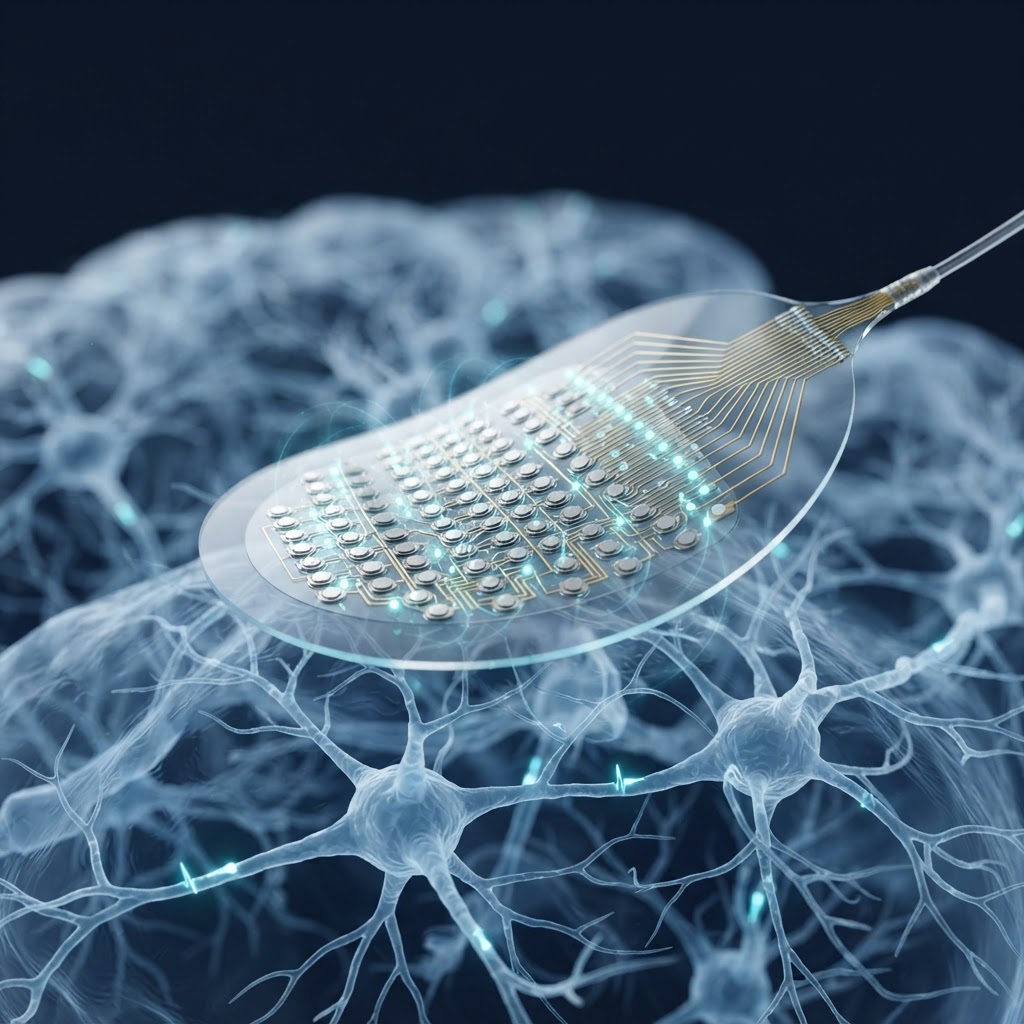
FLOBIO is a startup that plans to design, manufacture and validate wireless, ultra-flexible micro-LED and microelectrode platforms intended to deliver optical or electrical stimulation to deep brain targets — closing the loop between hardware and neuro-metabolic biology.
~535 µm
total implant thickness
Scientific framework
Hardware meets neuro-pharmacology
Traditional systemic treatments for chronic metabolic disorders suffer from off-target profiles and rapid desensitization. FLOBIO plans to pair precise flexible hardware — optical or electrical — with a defined pharmacological baseline to address that bottleneck.
High-density flexible devices
Wireless, biocompatible, ultra-flexible micro-LED and microelectrode arrays planned for stereotaxic alignment with deep-brain microcircuits. Optogenetics is expected to supply cell-type specificity for studying defined circuits such as the hypothalamic melanocortin system; electrical stimulation would offer a broader, dose-tunable route to the same targets.
Pharmacological priming
Planned use of novel natural-extract based small molecule compounds with unique transcriptional neuronal activity.
Closed-loop synergy
Measuring microcircuit responses across multi-week windows would let the platform isolate, quantify and map long-term neuro-metabolic recovery curves.
Platform
A flexible, wirelessly powered system built with fan-out wafer-level packaging
The underlying system was developed at UCLA's Center for Heterogeneous Integration and Performance Scaling: a near-field link will power a µLED or microelectrode wirelessly on an ultra-flexible elastomeric substrate — thin enough to reduce the discomfort and infection risk of conventional rigid implants.
> 15%
wireless power efficiency at 1 cm transmit distance
~535 µm
total thickness of the implantable system
< 2 cm
device diameter
~5 mm
bending radius on a biocompatible elastomer
Source: Ezhilarasu, Hanna, Irwin, Alam & Iyer, UCLA.